Stranded on a Highway Shoulder? How to Stay Safe Until the Tow Arrives
Quick Answer: The moment your car loses power on a highway shoulder, get it as far right as the pavement allows, turn on your hazards, and keep your seatbelt on. On a narrow shoulder or a road carrying fast, heavy traffic, staying inside the vehicle is usually safer than standing outside near the travel lane. If you do need to exit, get out on the side away from traffic and move well clear of the car. Reflective triangles or flares placed behind the vehicle warn approaching drivers with enough distance to react, and a call for a tow should go out as soon as you're stopped, not after you've tried everything else.
A dashboard warning light, a shudder from the engine, a tire that suddenly won't hold air, whatever the cause, the moment you realize you're losing control of the vehicle on a highway is disorienting. Cars and trucks are still passing at 65 or 70 miles an hour a few feet from your door. Every second you spend deciding what to do is a second you're sitting in a spot no driver expects a stopped car to be. What you do in the first minute matters more than anything a tow truck does once it arrives, so it helps to know the order of operations before you're the one gripping the wheel on the shoulder of I-40 or I-77.
Get as Far Right as the Road Allows
The single most important move is also the simplest: steer toward the right edge of the shoulder, not just onto it. A car sitting a foot or two into the shoulder is still close enough to the travel lane that a distracted or drifting driver can clip it. Aim for the far edge, near the guardrail or grass line, and keep rolling in that direction even if the engine is sputtering, as long as the car still has enough momentum to steer.
Once you're stopped, put the vehicle in park, set the emergency brake, and turn the wheels away from the roadway if you're on any kind of incline or slope. Turn your hazard lights on immediately, before you do anything else, since they're the first signal to approaching traffic that something is different about your car. If it's dusk or later, your headlights should stay on as well, both for your own visibility and so your taillights and hazards read clearly against the dark.
Central North Carolina's stretches of I-40 and I-77 through Statesville, Mooresville, and out toward Hickory carry a steady mix of commuter traffic and long-haul trucking, and shoulders on these corridors aren't always generous. If the shoulder is narrow, guardrail-lined, or you're near an on-ramp or curve, treat the space around your car as tighter than it looks and keep that in mind for every decision that follows.
Decide Whether to Stay Inside or Step Out
This is the decision most people get wrong, usually because instinct says to get out and put distance between yourself and the road. On a wide, flat shoulder with light traffic, exiting and moving well away from the car can make sense. On a busy interstate with a narrow shoulder, a curve, or heavy truck traffic, staying inside the vehicle with your seatbelt fastened is often the safer call, because the car itself, positioned as far right as possible, offers more protection than standing unprotected a few feet from 65-mile-an-hour traffic.
If you do decide to exit, always get out on the passenger side, away from the travel lane, never the driver's side facing traffic. Once out, move well past the guardrail or onto the grass, away from both the car and the roadway, rather than standing next to the vehicle or leaning against it. Standing at the rear of the car to look at a flat tire or under the hood puts you directly in the path of anything that drifts onto the shoulder. Most people get this backwards — they climb out to "check on things" before they've thought about where the traffic actually is.
Tip: Call for a tow as soon as you're safely stopped, not after you've tried to diagnose the problem yourself. Give the dispatcher your direction of travel, the nearest mile marker or exit number, and any landmark you can see, since that detail is what lets a tow operator find you quickly on a stretch of interstate that can look identical for miles in either direction. The sooner that call goes out, the less time you spend exposed on the shoulder.
Whatever you decide, keep your seatbelt buckled if you're inside the car. A parked vehicle on a shoulder that gets struck from behind is a real and recognized hazard, and a seatbelt is your protection in that scenario just as much as it is at highway speed.
Make Yourself Visible to Approaching Drivers
Visibility is what turns a stopped car from a hazard into a car drivers see and steer around in time. Hazard lights are the first layer, but on a highway shoulder they're often not enough on their own, especially in bright daylight when hazards can be hard to pick out against sun glare, or in fog and heavy rain when visibility drops for everyone.
If you have reflective warning triangles or road flares in the trunk, and it's safe to place them, set them out behind the vehicle in the direction traffic is coming from, spacing them at increasing distances so an approaching driver gets a warning well before they reach your car. This only makes sense to do if you can walk to that spot and back without crossing the travel lane or lingering next to moving traffic, so weigh it against the shoulder width and how close cars are actually running to the edge.
Raising the hood is a widely recognized signal that a car is disabled, and it adds another visual cue for drivers and for the tow operator trying to spot your vehicle from a distance. Tying a bright cloth or a bandana to your antenna, mirror, or door handle does the same job. None of these steps replace the hazards, they add to them, giving a driver multiple visual signals instead of just one blinking light they might not register in time.
Night vs. Daytime Considerations
Being stranded after dark changes the math. Your car is harder to see, other drivers' reaction time is shorter because headlights only illuminate so far ahead, and depth perception on a dark shoulder is worse for everyone, including you. Keep your interior dome light on if the battery allows it, since a lit interior helps a tow driver and a passing patrol vehicle spot your car faster, and it also lets you see inside your own vehicle if you need to.
If you exited the vehicle, staying near the car but well clear of the travel lane is harder to judge at night, since distances and speeds are tougher to read. Err toward staying inside with your seatbelt on unless there's a specific reason to be outside, like a fire risk or smoke from the engine. In full daylight the calculus shifts slightly, since visibility is better and it's easier to judge a safe distance, but the same rule about which side you exit from, and how far you move from the car, still applies.
Curves and hills deserve extra caution regardless of the hour, because a driver coming around a bend has less time to react to a stopped car than one on a straight stretch. If your breakdown happened just past a curve or crest, know that oncoming traffic has even less warning than usual, which makes your hazards, triangles, and position on the shoulder that much more important.
But don't overthink the clock. The same core rules apply whether it's noon or midnight — get right, get lit up, get clear. Only the margin for error changes.
What to Expect While You Wait
Once the tow request is in, the wait itself is mostly about staying put and staying visible rather than doing anything else. Resist the urge to keep checking under the hood or walking around the car repeatedly. Every trip outside the vehicle is another moment of exposure, and there's rarely anything more to learn once you've made the initial call.
Warning: The greatest risk in a highway breakdown isn't the mechanical failure itself, it's being struck by passing traffic while standing near the vehicle. Drivers on interstates and divided highways aren't watching for pedestrians the way they would be on a city street, and a shoulder that feels wide enough to stand on safely can be far closer to the travel lane than it appears. Stay as far from the roadway as the terrain allows, and treat every minute spent outside the car as a minute of added risk.
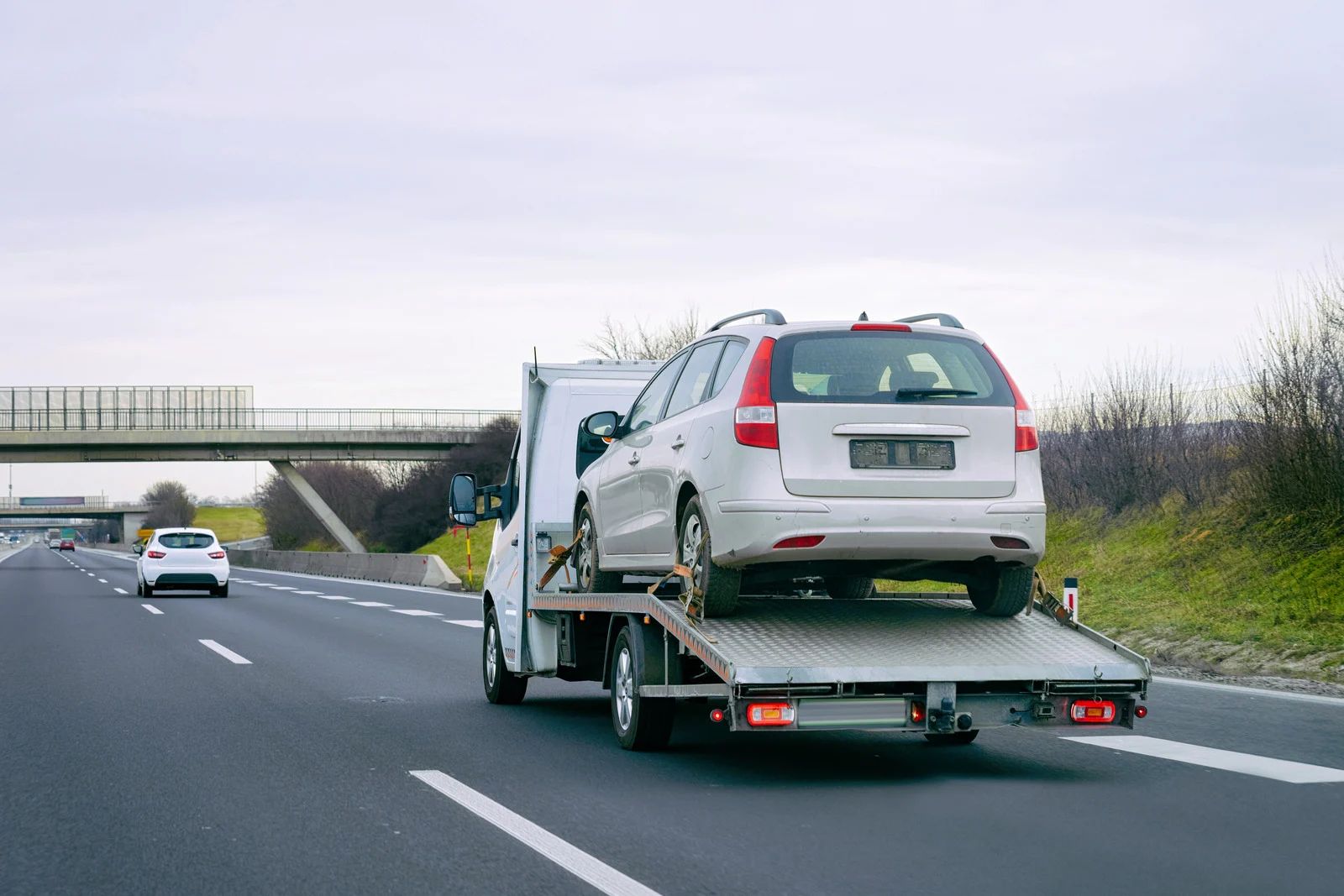
When the tow truck arrives, it will typically pull in ahead of or behind your vehicle depending on the setup needed, often with its own lights adding to the visibility around the scene. The operator will handle positioning the truck to shield the work area from traffic as much as the road allows, hook up your vehicle, and get both cars off the shoulder and back into normal traffic flow as quickly as the situation permits. Loading and departure typically go faster than the wait itself, since the operator has already sized up the situation over the phone and knows what equipment to bring.
Safer Roads Start With Smart Breakdown Decisions
A highway breakdown becomes much easier to manage when safety stays ahead of the mechanical problem. Getting completely onto the shoulder, using hazard lights, remaining buckled when conditions make exiting risky, and maintaining visibility can reduce unnecessary exposure to passing traffic. With 15 years of experience, The Towing Company LLC understands the challenges stranded drivers face throughout Statesville, NC, especially along busy interstate corridors where traffic speed, limited shoulders, darkness, and changing weather can make roadside situations more unpredictable.
While waiting for assistance, staying calm and limiting unnecessary movement around the vehicle are often the safest choices. Drivers should continue watching surrounding traffic, avoid standing near travel lanes, and remain in a protected location whenever possible. Whether a breakdown happens during a crowded afternoon commute or late at night, the same basic precautions remain valuable. Careful positioning, clear visibility, and good judgment help create a safer roadside environment until the vehicle can be professionally moved away from highway traffic.